
Many women assume that breakouts belong to their teenage years and feel blindsided when pimples reappear after 40. Perimenopausal acne is a real and surprisingly common experience, often driven by the same shifting hormones that bring hot flashes, irregular periods, and night sweats. As the body moves toward menopause, the skin responds to these internal changes in ways that can frustrate even people who enjoyed clear skin for decades. If midlife breakouts have you feeling discouraged, working with a provider who offers personalized women’s hormone care can help you understand what is happening and find a path toward calmer, clearer skin.
This guide explains why acne shows up during the menopause transition, how menopausal acne differs from teenage acne, and which treatment options and lifestyle factors actually make a difference.
Understanding Adult Acne After 40
Perimenopause is the transition leading up to menopause, when hormone production becomes erratic. Many women enter this phase in their early to mid-40s, although the timing varies. Because the menstrual cycle becomes unpredictable, the body is exposed to swinging hormones rather than the steady rhythm of earlier decades.
These hormonal fluctuations are one of the main reasons acne can resurface. When estrogen dips and male sex hormones become relatively more influential, the body produces excess oil that can clog pores. If you are still learning what perimenopause actually is, understanding this hormonal backdrop is the first step toward managing your complexion.
What Causes Perimenopausal Acne?

Perimenopausal acne is often caused or worsened by hormonal fluctuations during the transition to menopause. Estrogen begins to decline while androgen levels stay relatively steady, creating an imbalance that affects oil levels and skin cell behavior. This shift helps explain why so many people suddenly develop acne after years of stable, healthy skin.
Recognizing the early signs of perimenopause can help you connect new skin problems to this larger hormonal picture rather than treating breakouts in isolation.
Hormonal Fluctuations and Hormonal Acne
Hormonal acne develops when the sebaceous glands respond to changing hormone levels by producing more oil within the skin and hair follicles. As estrogen declines, a state of relative androgen dominance occurs, and increased androgen levels can lead to more oil production. That extra sebum mixes with dead skin cells, creating clogged pores and inflammation that surface as acne breakouts.
Stress adds another layer. Stress can worsen acne through hormonal and inflammatory pathways, so periods of poor sleep or emotional strain often coincide with worse flare-ups.
How Skin Changes During the Transition
Skin changes during perimenopause go beyond breakouts. Declining estrogen levels affect collagen, hydration, and cell turnover, leaving menopausal skin thinner and sometimes drier. Thinner skin barriers during perimenopause increase susceptibility to irritation, which means harsh products can backfire.
These skin changes may also affect how efficiently the surface sheds dead skin cells, allowing more debris to accumulate in pores. The result is a frustrating combination of dry skin in some areas and oily, acne-prone zones in others.
Why Adult Acne Differs From Teenage Acne
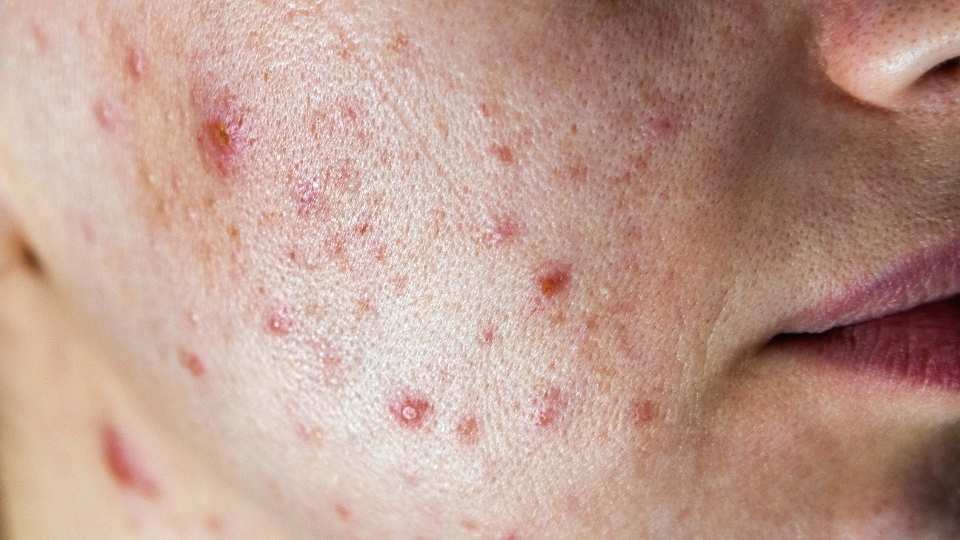
Adult acne behaves differently from the breakouts of adolescence. Teenage acne tends to cluster across the forehead, nose, and cheeks, while adult acne and midlife breakouts more often appear along the lower face. Adult acne is often deeper and more tender, though it can also include whiteheads, blackheads, and surface-level bumps.
Because mature skin is thinner and more reactive, the aggressive products that once worked on teenage acne can irritate it. Treating adult acne effectively means respecting how delicate the skin barrier has become. Understanding the difference between perimenopause and menopause can also clarify how your complexion may continue to change over time.
Recognizing Menopausal Acne and Where It Appears
Menopausal acne tends to follow a predictable pattern. It often appears along the jawline and chin, the areas most sensitive to hormonal signals. Perimenopausal acne often results in deep, painful breakouts along the jawline, sometimes developing into cystic acne that lingers for weeks.
Knowing where menopausal acne shows up helps distinguish it from other skin problems. Jawline-focused breakouts that flare with your cycle or stress are strong clues that hormones are the underlying driver.
| Treatment Type | Examples | How It Helps |
|---|---|---|
| Over-the-counter treatments | Salicylic acid, benzoyl peroxide | Unclog pores, reduce bacteria, and calm acne symptoms |
| Topical treatments (prescription) | Topical retinoids like tretinoin | Boost cell turnover and prevent clogged pores |
| Oral medications | Spironolactone | Lowers the effect of male sex hormones to calm acne |
| Hormone replacement therapy | Estrogen-based therapy when medically appropriate | May help some menopause symptoms and may affect skin, but it is not a primary acne treatment |
Acne During Menopause: The Role of Declining Estrogen
Acne during menopause can be tied to falling estrogen and relative androgen influence. Women typically enter menopause around age 51, and estrogen declines significantly during this time. Because this sex hormone helps counterbalance androgens, its loss can tip the balance toward oilier, more reactive skin.
This is why acne during menopause can persist even after periods stop. The fluctuating hormone levels of perimenopause may settle, but low estrogen and relative androgen dominance can continue to influence the sebaceous glands. Treating menopausal acne usually focuses on calming inflammation, preventing clogged pores, and reducing androgen-driven oil production when appropriate. Some women find that this is also when other menopause symptoms, like joint stiffness or frozen shoulder during menopause, become noticeable alongside their skin concerns.
Managing Menopause Acne With Topical and Oral Treatments
Effective menopause acne management usually combines topical treatments with oral approaches. Over-the-counter treatments containing salicylic acid and benzoyl peroxide are a sensible starting point. Salicylic acid helps clear dead skin and debris from pores, while benzoyl peroxide targets acne-causing bacteria. Alpha hydroxy acids can also support gentle exfoliation.
When over-the-counter treatments are not enough, prescription options expand the toolkit. Topical retinoids like tretinoin improve cell turnover, and oral medications such as spironolactone are an effective choice for hormonal acne in women because they reduce the influence of androgens. For some menopausal women, hormone replacement therapy may influence skin symptoms, but it is usually considered for broader menopause symptoms rather than acne alone and should be discussed with a healthcare provider. With a consistent plan, menopausal acne usually improves over a few months rather than overnight.
Because every case is different, a healthcare provider can help match proper treatment to your skin and overall health. If you want guidance, Azona Health offers hormone evaluation and treatment tailored to women navigating this stage.
Building a Skin Care Routine for Acne-Prone Skin
A consistent skincare routine is crucial for managing acne during and after menopause, and it should be gentle rather than aggressive. For acne-prone skin, the goal is to reduce excess oil and clogged pores without stripping the barrier that mature skin needs.
A practical daily routine includes:
- A gentle cleanser is used twice daily, since a gentle cleanser helps remove excess oil without irritation.
- Non-comedogenic moisturizers, which help maintain skin barrier health and prevent the dryness that thinner skin is prone to.
- A targeted active, such as salicylic acid or a topical retinoid, is introduced slowly.
- Non-comedogenic products overall, because they prevent clogged pores and breakouts.
- Avoiding heavy, oil-based cosmetics that can worsen existing acne.
Consistency matters more than intensity. Pushing too hard with strong products can irritate the complexion and trigger more breakouts, so give any new step several weeks before judging how your skin responds.
Supporting Menopausal Skin With Diet
What you eat can influence menopausal skin. High-glycemic diets may worsen acne in some people by affecting insulin-related pathways that influence oil production and inflammation. Dairy products, especially skim milk, have been weakly linked to increased acne risk in some studies, and reducing dairy may ease acne flare-ups in some women.
Dietary changes can support clearer skin during menopause. Brightly colored fruits and vegetables support overall skin and metabolic health, and dietary factors like limiting refined carbohydrates often help.
Simple, supportive dietary adjustments include:
- Reducing high-glycemic foods such as white bread, sugary snacks, and soda.
- Cutting back on dairy products if you notice they trigger breakouts.
- Adding brightly colored produce to support skin health and overall women’s health.
Natural Remedies and Lifestyle Adjustments
Beyond diet, simple home strategies and everyday habits play a meaningful role. Implementing lifestyle changes can support perimenopausal acne symptoms, and these adjustments support both your skin and your wider wellbeing.
Stress management techniques may reduce acne flare triggers and support a healthier inflammatory balance. Mindfulness exercises can improve skin health and reduce stress, and simple practices like deep breathing, regular movement, and consistent sleep all qualify as meaningful self-care. These lifestyle adjustments will not replace medical treatment for severe cases, but they can make existing acne easier to control and help your immune system function well.
Protecting Your Skin Health Long-Term
Long-term skin health depends on protecting the skin you have. Daily sun protection matters because UV rays can worsen acne scarring and speed up visible aging, so use a non-comedogenic sunscreen and avoid tanning. Pair sun care with a steady routine and patience as your complexion adjusts.
If breakouts are persistent, painful, or affecting your confidence, talk with a healthcare professional. A healthcare provider can review prescription options, rule out other causes, and check androgen levels if symptoms suggest excess androgens.
Many women find that combining medical treatment with thoughtful lifestyle factors during menopause leads to lasting improvement, and Azona Health’s online medical care options make it easier to get support from home. Persistent menopausal acne deserves professional attention, and the right plan can keep skin clear well beyond menopause. You can also learn how long perimenopause lasts to set realistic expectations for your skin’s journey.
Perimenopause Acne: Frequently Asked Questions
Is perimenopausal acne different from teenage acne?
Yes. Teenage acne usually spreads across the forehead and cheeks, while menopausal acne concentrates along the jawline and chin. It tends to be deeper and more tender, and it stems from hormonal changes during the menopause transition rather than the hormone surges of puberty, so it often needs a gentler, hormone-focused approach.
Can hormone replacement therapy help with menopausal acne?
For some menopausal women, hormone replacement therapy may affect skin symptoms, but it is usually considered for broader menopause symptoms rather than acne alone. It is not right for everyone, so discuss the benefits and risks with a healthcare provider who can weigh your full health history before recommending this or other treatment options.
Do natural remedies and diet really reduce acne during menopause?
They can help, though results vary. Reducing high-glycemic foods may help some people, and reducing dairy products may help select individuals. Eating colorful produce and practicing stress management techniques support overall skin health. These habits work best alongside a consistent skincare routine and any prescribed topical or oral treatments rather than as a standalone fix.