Not as a weight loss treatment. The strongest evidence available says testosterone therapy does not reduce total body fat in women, and no professional medical body currently recommends it for weight loss.
Many women arrive at this question after months of effort that has not moved the scale. That answer runs against much of what you will find searching this question, because many of the pages making the opposite claim are selling the treatment. So here is what the research actually found, what testosterone is genuinely useful for in women, and what tends to move the number when weight is the real concern. If that is what brought you here, Azona Health offers medical weight loss through telehealth across Arizona.
What Testosterone Actually Does in a Woman’s Body
Calling testosterone a male hormone is the first thing that goes wrong in this conversation.
Androgens, the hormone family testosterone belongs to, are produced by the ovaries and the adrenal glands, and the National Institute of Child Health and Human Development describes them as reproductive hormones present in both sexes rather than exclusively male ones [1]. Women produce significantly less testosterone than men, but it is an essential hormone in women’s health all the same, with roles in sexual function, sexual health, muscle tone, bone density, and overall health.
The age story is also more complicated than the marketing suggests. The global consensus reports that testosterone concentrations decline during the reproductive years, and that concentrations appear to be maintained in women beyond the age of 65 [2]. In other words, testosterone does not crash at menopause the way estrogen does. It drifts down as women age through their thirties and forties, then holds.
That matters here, because a lot of pages selling testosterone to menopausal women imply a sudden menopausal collapse in testosterone that the evidence does not describe. If you want the hormones that genuinely do track with midlife weight, our post on the link between hormones and weight gain is the better starting point.
What the Evidence Actually Shows

In 2019, an international coalition of medical societies published the Global Consensus Position Statement on the Use of Testosterone Therapy for Women. It remains the reference document clinicians work from.
On body composition, its finding is direct: “No statistically significant effect of testosterone administered in physiologic doses has been demonstrated on lean body mass, total body fat, or muscle strength” [2].
That one sentence covers the three things testosterone is usually marketed to women for. Not fat loss, not lean muscle mass, not muscle strength. The same statement reports no effect on general wellbeing, insufficient evidence for cognitive function, and no supported effect on bone mineral density at the spine, total hip, or femoral neck.
None of that means testosterone does nothing in the female body. What the evidence says is narrower: the specific claim that testosterone therapy drives weight loss has been looked for and has not been found.
For a fuller picture of the hormones that do influence weight, our post on the role of hormones in weight loss covers the ones with better evidence behind them.
The One Use That Is Evidence-Based
Testosterone therapy in women is not fringe, and it is not useless. It has a real indication.
The consensus statement is specific: the only evidence-based indication for testosterone in women is treating postmenopausal women diagnosed with hypoactive sexual desire disorder, or HSDD. Summarizing the same consensus, the Endocrine Society noted that testosterone “can be effective at improving sexual wellbeing for postmenopausal women with HSDD,” and that the statement “does not support the use of testosterone for any other symptoms or medical condition” [3].
So a postmenopausal woman with distressing low sexual desire is having a legitimate conversation when she asks about testosterone therapy. Women who start testosterone therapy on that basis are working from evidence. A woman whose main goal is the scale is having a different conversation, and the honest thing is to say so rather than blur the two.
Put another way, effective testosterone therapy in women has one target the research actually supports, and body weight is not it.
What About the Newer Research on Fat Distribution?
There is a more nuanced finding worth knowing, and it gets quoted out of context.
A 2026 University of Connecticut study followed 66 women over age 65 who were recovering from a recent hip fracture. One group received topical testosterone gel alongside therapeutic exercise, the other did exercise alone, and body composition was measured by DXA scan before and six months after.
The testosterone group showed less fat stored in the visceral compartment, while visceral fat increased in the exercise-only group. That is a meaningful signal about where fat sits.
The same study also reported “no change in the percentage of total body fat between the two groups” [4].
Read carefully, that supports the consensus rather than overturning it. Fat moved. Fat did not go away. And the population was narrow: women over 65 recovering from a hip fracture, which is not the person typing this question into a search bar. It is a small, early study in a specific clinical situation, not a weight loss finding.
There Is No FDA-Approved Testosterone Product for Women
This matters for anyone weighing the decision.
The FDA states that “Testosterone products are FDA-approved only for use in men who lack or have low testosterone levels in conjunction with an associated medical condition” [5]. There is no testosterone product approved in the United States for use in women, for weight loss or for anything else.
That does not automatically make prescribing it wrong. Physicians prescribe off-label routinely and legally, and the consensus itself says that where no approved female preparation exists, off-label prescribing of an approved male formulation is reasonable, provided hormone concentrations stay in the physiologic female range.
The dose is the whole point. Male formulations deliver far more testosterone than a woman’s physiologic dose, and the consensus is explicit that any preparation producing supraphysiologic testosterone concentrations, including pellets and injections, is not recommended. Oral testosterone is separately not recommended, because it is associated with adverse effects on HDL and LDL cholesterol.
The consensus also found that compounded preparations cannot be recommended for treating HSDD, citing the lack of evidence for efficacy and safety. If a clinic offers you compounded testosterone or pellet therapy, those are questions to ask directly rather than assume.
Is Testosterone Therapy Safe for Women?
At the right dose, the safety picture is more reassuring than the marketing around it is honest.
The consensus found that testosterone therapy for postmenopausal women, at doses approximating premenopausal physiologic concentrations, “is not associated with serious adverse events” [2]. It is associated with mild increases in acne and body or facial hair growth in some women, but not with alopecia, clitoromegaly, or voice change. Non-oral routes at physiologic doses showed no statistically significant adverse effects on lipid profiles over the short term, and testosterone therapy has not been associated with increases in blood pressure, blood glucose, or HbA1c.
There are real limits to what is known. Safety data at physiologic doses do not extend beyond 24 months of treatment. Data from randomized trials are insufficient to assess long-term breast cancer risk, and because women with a prior breast cancer diagnosis were excluded from the HSDD trials, the consensus recommends caution for women with hormone-sensitive cancers. A nonsignificant trend toward deep vein thrombosis has been observed, with the role of concurrent estrogen therapy not excluded.
None of that is alarming at a correctly monitored physiologic dose. All of it is a reason the dose belongs with a prescriber rather than a protocol you found online.
What Causes Low Testosterone in Women
There is no formal diagnosis of testosterone deficiency in women that works the way male hypogonadism does, and no agreed threshold that defines androgen deficiency in a woman. That is worth saying plainly, because low T in women is often presented online as a settled condition with a settled treatment.
What does exist are situations that plausibly lower androgen production or change what a test reads:
- Age. Testosterone levels decline through the reproductive years before leveling off.
- Removal of the ovaries, which takes out one of the two production sites.
- Conditions affecting the adrenal glands, such as adrenal insufficiency, or an underactive pituitary gland, since those glands drive the signal for testosterone production.
- Oral estrogen and some forms of hormonal birth control, which raise sex hormone-binding globulin and lower free testosterone as measured.
Polycystic ovary syndrome sits at the opposite end. Women with PCOS have higher androgen levels, which can drive hair growth and acne and can interfere with the brain signals that control ovulation, producing irregular menstrual cycles [1]. A woman with an irregular menstrual cycle and unwanted hair growth is more likely dealing with too much androgen than too little, which is one more reason the symptom-list approach fails.
How Low Testosterone Is Diagnosed in Women
Carefully, and not from a single number. Diagnosing low testosterone in women has no agreed threshold, so before low testosterone is diagnosed, a provider is really ruling other things out.
A provider takes a medical history, asks how symptoms started and what else changed, and rules out the conditions that mimic hormonal imbalance. Thyroid disease, iron deficiency, sleep apnea, mental health conditions such as depression, and the menopausal transition itself all produce overlapping symptoms: reduced libido, persistent fatigue, low energy levels, mood swings, thinning hair, and weight gain.
Lifestyle factors belong in that review too. Chronic underfueling, heavy training loads, and long-term sleep restriction all affect hormone balance, and hormonal balance restored by a prescription is not the fix when the cause is behavioral.
Where testing helps, it is one input among several. Where it misleads is when a result inside or outside a lab’s normal range gets treated as the answer on its own.
Why a Blood Test Does Not Settle It
Women searching this question often want a lab result that explains the weight. The consensus is blunt that a number will not do that job.
No cutoff blood level of any measured circulating androgen distinguishes women with sexual dysfunction from women without it, and a blood level should not be used to diagnose HSDD.
Total testosterone and free testosterone assays in the female range are also technically difficult, and results shift with sex hormone-binding globulin, which itself rises on oral estrogen and some hormonal contraceptives. Hormone levels fluctuate, so a single number, drawn once, is weak evidence on its own.
There is a broader point. The symptoms of low testosterone that get listed online, persistent fatigue, low energy levels, mood changes, thinning hair, low libido, vaginal dryness, and weight gain, overlap almost entirely with menopause, thyroid disease, iron deficiency, depression, and simple sleep debt. Testing hormone levels can be part of a workup. The workup is what finds the answer.
Our post on the signs of hormonal imbalance walks through the symptoms worth investigating.
What Is Actually Driving Midlife Weight Gain
If you are a woman in your forties or fifties watching weight settle differently, hormones probably are involved. Just not the one you were searching for.
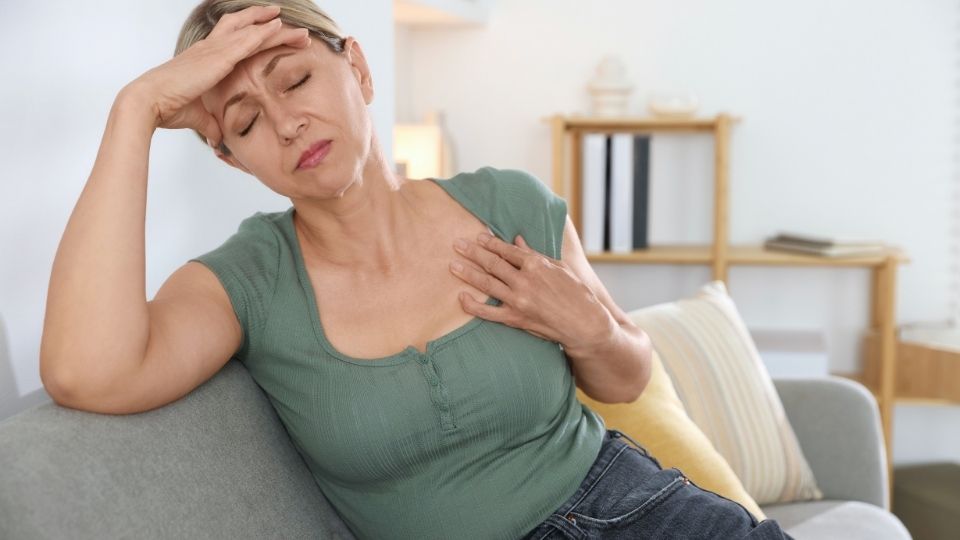
The National Institute on Aging lists body composition changes as part of the menopausal transition, including weight gain, muscle loss, and fat redistribution, alongside hot flashes, sleep disruption, and mood changes [6]. Falling estrogen, not falling testosterone, is the hormonal change with the clearest link to increased body fat in midlife and to where that fat sits.
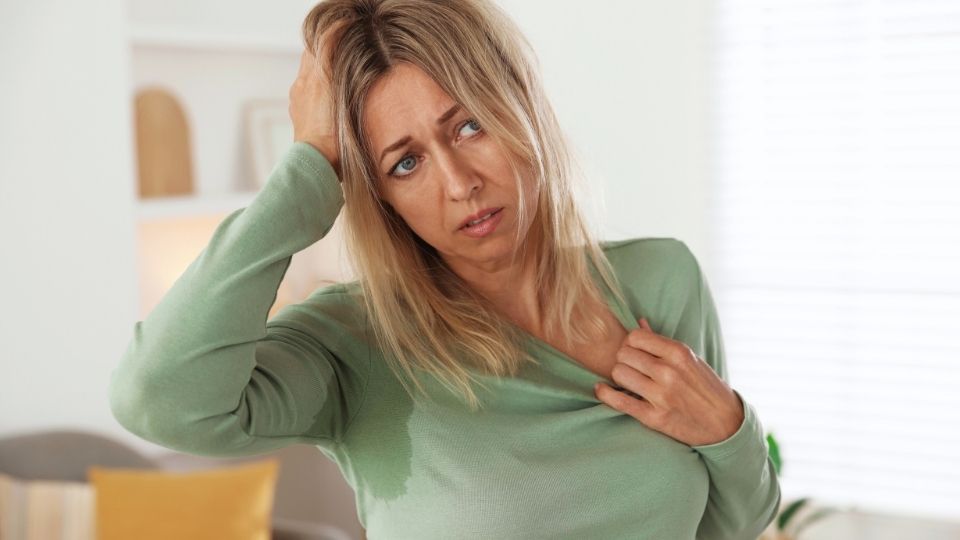
Sleep is the underrated piece. Night sweats that fragment sleep for months make appetite regulation harder, and that is a treatable problem rather than a character flaw.
Age-related muscle loss compounds it. Less muscle mass means a lower resting metabolic rate, which is why strength training tends to matter more at 50 than it did at 30, and why protein becomes something to plan rather than assume.
What Tends to Work Instead
None of this means you are stuck.
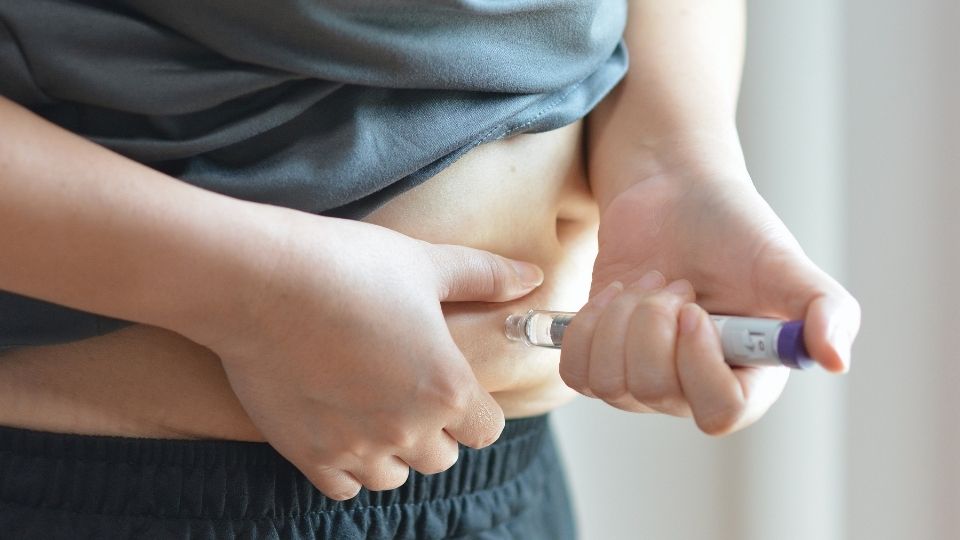
For weight specifically, medically supervised programs have the evidence testosterone lacks: GLP-1 medications such as semaglutide and tirzepatide, structured nutrition and behavior support, and resistance training to protect lean mass while losing fat.
For menopausal symptoms driving the weight, treating the symptoms is often the unlock. If hot flashes and night sweats are destroying your sleep, addressing that changes what the rest of the plan can accomplish. Hormone replacement therapy has an evidence base for those symptoms that testosterone does not have for weight. Our post on the signs you need hormone replacement therapy covers who is a candidate and who is not.
For low sexual desire after menopause, that is where the testosterone conversation legitimately belongs, on its own merits, with a provider who will diagnose HSDD properly rather than hand it out as a metabolism booster. Azona Health’s women’s hormone therapy is where that conversation starts.
The useful move is separating the goals. Weight, sleep, mood, and libido are separate problems that sometimes share a cause. Treating them as one problem with one hormone is how women spend a year and a lot of money without moving any of them.
Can Testosterone Help Women Lose Weight? Frequently Asked Questions
Will Testosterone Help a Woman Lose Weight?
The available evidence says no. The global consensus found no statistically significant effect of physiologic-dose testosterone on total body fat, lean body mass, or muscle strength in women, and no professional body recommends it as a weight loss treatment.
Does Testosterone Reduce Belly Fat in Women?
One small 2026 study in women over 65 recovering from hip fracture found less visceral fat in the testosterone group, but no difference in total body fat percentage. That is a fat distribution signal in a narrow population, not evidence of fat loss, and it should not be generalized to healthy midlife women.
What Are the Side Effects of a Woman Taking Testosterone?
At doses that keep blood levels in the healthy premenopausal range, the consensus found no serious adverse events, with mild increases in acne and body or facial hair growth in some women. It specifically did not find alopecia, clitoromegaly, or voice change at those doses. Women who receive testosterone therapy at supraphysiologic doses face a different risk profile, which is why pellets, injections, and oral testosterone are not recommended.
How Does a Woman Know If She Needs Testosterone?
Not from a lab value alone, since no cutoff blood level distinguishes women with and without sexual dysfunction. The evidence-based path starts with a clinical diagnosis of HSDD after menopause, not with a symptom checklist or a screening panel. That is the situation in which women benefit from testosterone treatment according to the evidence.
Is Testosterone Supplementation Different From Prescription Testosterone Therapy?
Over-the-counter testosterone supplementation is not the same as prescribed hormone therapy and is not regulated the way a prescription drug is. If you are considering treating low testosterone, that belongs in a conversation with a prescriber who can monitor levels rather than in a supplement aisle.
Sources
- Eunice Kennedy Shriver National Institute of Child Health and Human Development. What causes PCOS? https://www.nichd.nih.gov/health/topics/pcos/conditioninfo/causes
- Davis SR, Baber R, Panay N, et al. Global Consensus Position Statement on the Use of Testosterone Therapy for Women. The Journal of Clinical Endocrinology & Metabolism, 2019. https://academic.oup.com/jcem/article/104/10/4660/5556103
- Endocrine Society. Coalition Issues International Consensus on Testosterone Treatment for Women. https://www.endocrine.org/news-and-advocacy/news-room/2019/coalition-issues-international-consensus-on-testosterone-treatment-for-women
- University of Connecticut. Testosterone Improves Fat Distribution for Older Women, 2026. https://today.uconn.edu/2026/03/testosterone-improves-fat-distribution-for-older-women
- U.S. Food and Drug Administration. Testosterone Information. https://www.fda.gov/drugs/postmarket-drug-safety-information-patients-and-providers/testosterone-information
- National Institute on Aging, National Institutes of Health. What Is Menopause? https://www.nia.nih.gov/health/menopause/what-menopause