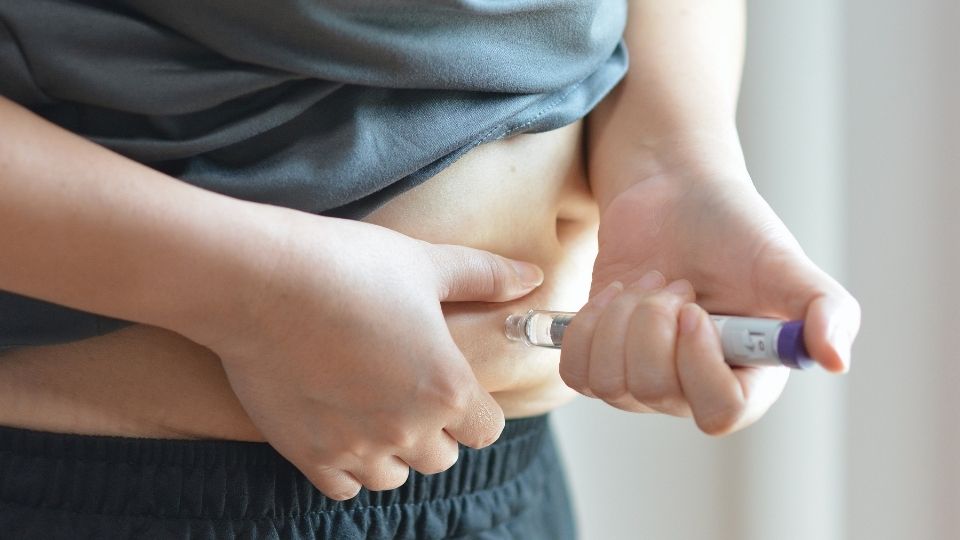
Yes. Tirzepatide needs to be refrigerated between 36°F and 46°F (2°C to 8°C), and so does semaglutide. Both can spend a limited stretch at room temperature, but that window is shorter than most people assume, and in Arizona it is easier to blow through than almost anywhere else in the country.
If your medication arrives at your door in July, the outside air is already well above the highest temperature either label allows. That is the part worth understanding before you go looking for your delivery after work.
Here is what the FDA-approved labeling actually says for each medication, how compounded versions differ, and what to do when heat gets involved. If you are starting treatment or have questions about a shipment, Azona Health provides medical weight loss with provider check-ins throughout.
The short answer for both medications

Injectable semaglutide and tirzepatide products are generally refrigerated before use, although each product has its own room-temperature storage allowance. Semaglutide is also available in oral tablet formulations that are stored at room temperature. Neither can be frozen.”
The specific numbers differ by product and by device, which matters because the two drugs are not interchangeable and their storage requirements are not identical either. Our post on the difference between semaglutide and tirzepatide covers how the medications themselves compare.
Semaglutide and tirzepatide are peptide medications. Their activity depends on a specific molecular structure, and the temperature limits printed on the label exist because heat and freezing can disturb that peptide structure. That is why the numbers are not suggestions.
One rule applies to everything below. Always follow the storage guidelines that came with your specific product, and when your carton says something different from a general article, the carton wins.
Tirzepatide storage requirements
The Zepbound medication guide instructs patients to store the single-dose pen and single-dose vial in the refrigerator between 36°F to 46°F (2°C to 8°C). The multi-dose vial and the single-patient-use KwikPen carry the same refrigerator temperature.
For room temperature storage, each single-dose pen or single-dose vial can be stored at room temperature up to 86°F (30°C) for up to a total of 21 days. The phrase “a total of” is the important part. Current labeling limits single-dose Zepbound products to a total of 21 days at room temperature. Because instructions about returning a product to refrigeration have differed across label versions and devices, follow the Instructions for Use packaged with your specific product rather than repeatedly moving it in and out of refrigeration based on a general rule.
Multi-dose vials and the KwikPen work differently. Throw them away after a total of 30 days at room temperature, 30 days after first use, or after taking four weekly doses, whichever comes first.
Two absolutes: do not freeze tirzepatide, and do not use tirzepatide if it has been frozen. Store it in the original carton to protect it from light [1].
Semaglutide storage requirements
Injectable semaglutide follows the same refrigerator temperature. Unopened semaglutide pens go in the refrigerator between 36°F to 46°F (2°C to 8°C).
The room temperature allowance depends on the device. A single-dose pen or syringe of semaglutide injection can be stored from 46°F to 86°F (8°C to 30°C) in the original carton for up to 28 days. A multi-dose pen, once in use, can be stored between 59°F to 86°F (15°C to 30°C) or in the refrigerator for up to 56 days.
The labeling is blunt about failure conditions. Protect the pen from excessive heat and light. However, light-storage instructions vary by product. Wegovy single-dose pens and syringes should be discarded after improper light exposure according to their label, while other semaglutide devices instruct patients to protect them from light. Follow the exact instructions for your device.
Oral semaglutide is the exception to all of this. The oral tablet form is stored at room temperature between 68°F and 77°F (20°C and 25°C), in a dry place away from moisture, and does not go in the refrigerator at all [2].
Storage at a glance
For FDA-approved products, the labeled numbers are:
- Refrigerator, both medications: 36°F to 46°F (2°C to 8°C), in the original carton, until the printed expiration date.
- Tirzepatide single-dose pen or vial: up to a total of 21 days at up to 86°F (30°C).
- Tirzepatide multi-dose vial or KwikPen: discard after 30 days at room temperature, 30 days after first use, or four weekly doses, whichever comes first.
- Semaglutide single-dose pen or syringe: up to 28 days at 46°F to 86°F (8°C to 30°C).
- Semaglutide multi-dose pen in use: up to 56 days at 59°F to 86°F (15°C to 30°C) or refrigerated.
- Oral semaglutide tablets: room temperature, 68°F to 77°F (20°C to 25°C), never refrigerated.
- Every product: never freeze, never use after freezing, keep out of direct sunlight.
A cheap refrigerator thermometer is worth buying. Home refrigerator temperatures can vary by location and appliance, so a refrigerator thermometer can help confirm that the storage area remains between 36°F and 46°F.”
What Arizona heat does to a medication rated for 86 degrees

Phoenix’s 1991–2020 normal July average high is 106.5°F. In July 2025, the observed average high was even hotter at 107.6°F.” [3].
Both labels cap room temperature storage at 86°F. A normal Phoenix July afternoon runs more than twenty degrees above that ceiling, every day, for weeks. This is not an unusual heat event. It is the average.
For most of the country, “room temperature” and “outdoors” are roughly the same thing for much of the year. Do not interpret the label’s ‘room temperature’ allowance as permission to store medication outdoors. The 86°F figure is an upper storage limit, not a definition of safe outdoor storage.
The car is the fastest way to ruin a dose
Never leave injectable medications in a car, and that includes car glove compartments and center consoles.
The National Weather Service has documented how fast vehicle interiors heat up. In one demonstration, “in just over 2 minutes the car went from a safe temperature to an unsafe temperature of 94.3°F,” and a dark dashboard or seat “can easily reach temperatures in the range of 180 to over 200°F.” Cracking a window does not solve it, because “leaving the windows slightly open does not significantly decrease the heating rate” [4].
A parked car can exceed the medication’s 86°F limit very quickly, depending on outdoor temperature, sunlight, vehicle color, and other conditions. Even a short stop can create an avoidable storage excursion.
Delivery day matters more here
If your medication ships to you, the package can sit on a doorstep in direct sunlight for hours. Extreme temperatures on a porch in June are a real storage history problem, not a hypothetical one.
Plan for it. Have deliveries sent where someone can bring them in quickly, use a shaded or covered drop spot, and get the package into the refrigerator as soon as it arrives. If a shipment sat out through an afternoon and arrived warm to the touch, do not inject it and do not decide on your own that it is probably fine. Call your provider or the pharmacy and describe what happened. Our post on how online semaglutide prescriptions work explains what the shipping step normally looks like.
How to store it properly at home
Proper storage is mostly about avoiding a few specific mistakes, and the recommended storage guidelines below cover the ones that actually cost people doses.
Keep unopened tirzepatide pens and unopened semaglutide pens in the main body of the refrigerator, not the refrigerator door. The door swings into warm kitchen air every time it opens, and the refrigerator temperature there is the least stable in the appliance. When stored continuously within the labeled refrigerator range, unopened products can generally be used until the expiration date printed on the label.
Keep the medication out of the freezer compartment and away from direct contact with the back wall of the fridge, where freezing temperatures can occur in some units. Frozen product is discarded, not thawed and used.
Leave everything in the original carton until you need it. The carton is what protects the medication from light, and it also keeps the printed expiration date with the product instead of on a box you threw away.
Keep the pen cap on between doses, store away from direct sunlight and excessive heat, and do not store it in a bathroom cabinet where humidity and shower heat swing the conditions.
How to tell if your medication has gone bad
You cannot reliably see heat damage. That is the honest answer, and it is why storage conditions matter so much for temperature-sensitive medications: an improperly stored semaglutide or tirzepatide pen can look completely normal. A pen that was stored improperly gives you no visual warning at all.
There are still a few things worth checking before every injection. Look at the liquid. If it is cloudy, discolored, or has floating particles in it, do not use it. Check the printed expiration date on the carton. Expired medication goes in the disposal, not in your leg, and that applies equally to expired semaglutide and expired tirzepatide.
If the storage history is uncertain, treat it as suspect. A degraded medication does not usually announce itself with a bad smell or an odd color, and reduced medication effectiveness is easy to mistake for the medication simply not working for you. That confusion can cost you weeks of progress, and it muddies your treatment outcomes, because neither you nor your provider can tell whether the plan is wrong or the vial was.
If storage conditions are uncertain, set the medication aside and contact the dispensing pharmacy, manufacturer, or prescriber before using or discarding it. They may be able to determine whether the specific temperature excursion is acceptable.
Do not try to compensate by changing anything about your dose. Talk to your provider.
Traveling with GLP-1 medication
Keep injectable medications in your carry-on bag, never in checked luggage.
The Transportation Security Administration allows an exception to the usual liquid limits: “You may bring medically necessary liquids, medications and creams in excess of 3.4 ounces or 100 milliliters in your carry-on bag.” Remove them from your bag to be screened separately, and note that TSA recommends medication be clearly labeled to make screening easier [5].
Bring a small insulated case with a cooling element. Gel packs and ice packs are allowed under the same medically necessary provision. Keep the medication cold but not frozen, which usually means a barrier between the pen and the pack rather than direct contact.
What to do if you left it out
Do not panic, and do not assume the worst or the best.
Work out roughly how long it was out and how hot it got. If it was kept at room temperature under 86°F and you are inside the labeled window for your product, the medication remains safe to use by the label’s own terms, and the clock keeps running.
If it went above 86°F, was left in a car, or sat in the sun, do not assume the medication remains effective. Contact your provider or pharmacy before your next dose and tell them how long it was exposed and roughly how hot it got.
Does Tirzepatide Need to Be Refrigerated? Frequently Asked Questions
How long does tirzepatide last in the fridge?
Until the expiration date printed on the carton, as long as it is held between 36°F and 46°F the whole time. The shorter clock is the room temperature one, not the refrigerated one.
How long can a GLP-1 be out of the fridge?
It depends on the exact product. FDA-approved tirzepatide single-dose pens and vials allow up to a total of 21 days at up to 86°F, single-dose semaglutide pens allow up to 28 days, and a semaglutide multi-dose pen in use allows up to 56 days. Compounded versions follow the compounding pharmacy’s instructions instead.
Does tirzepatide expire?
Yes. Every product carries an expiration date printed on the carton, and separately, an in-use limit once you start it or once it leaves refrigeration. Both matter, and whichever comes first is the one that governs.
Can I put it back in the fridge after it has been at room temperature?
It depends on the specific brand, device, and current Instructions for Use. Some products track total room-temperature exposure, some have an in-use clock that continues regardless of refrigeration, and some labeling has instructed patients not to return a product to refrigeration after room-temperature storage. Check your exact product instructions or ask your pharmacist.
What happens if my medication gets warm?
Heat can degrade these medications, and there is no home test for it. Improper storage does not always mean the medication is unsafe, but it can mean it no longer works as expected, which affects both appetite and blood sugar control. Ask your provider rather than pressing forward and hoping.
Sources
- U.S. Food and Drug Administration, DailyMed. ZEPBOUND (tirzepatide) Medication Guide. https://dailymed.nlm.nih.gov/dailymed/medguide.cfm?setid=487cd7e7-434c-4925-99fa-aa80b1cc776b
- U.S. Food and Drug Administration, DailyMed. WEGOVY (semaglutide) Medication Guide. https://dailymed.nlm.nih.gov/dailymed/medguide.cfm?setid=ee06186f-2aa3-4990-a760-757579d8f77b
- National Weather Service Phoenix. July 2025 Climate Summary, Phoenix, AZ. https://www.weather.gov/media/psr/Climate/July2025Climate.pdf
- National Weather Service. Children, Pets and Vehicles. https://www.weather.gov/safety/heat-children-pets
- Transportation Security Administration. I am traveling with medication, are there any requirements I should be aware of? https://www.tsa.gov/travel/frequently-asked-questions/i-am-traveling-medication-are-there-any-requirements-i-should-be